MENU

NEWS

  • Newspaper Article

    An article I wrote about my work for the “Sophia Kyoto Shimbun Cultural Congress” series was featured in the June 29th morning paper.

    “Composing The Tale of Genji with Kirikane Glass”

    Please enjoy a translation of the article below.


    “Composing The Tale of Genji with Kirikane Glass”

    I am the world’s only Kirikane Glass artist. As the name suggests, Kirikane Glass put simply is a way of trapping Kirikane within a three-dimensional glass form, which–much like a kaleidoscope–allows the Kirikane countless different expressions due to the optical effects of the reflections and refractions.

    Kirikane is an ancient method of creating extremely delicate patterns by adhering fine strips of gold foil to a surface, used mainly to decorate Buddhist sculptures and paintings. It was brought into Japan along with Buddhism during the 6th century, and was well received among the aristocrats of the capital in Kyoto during the Heian Period. Kirikane was at its peak during this period and the technique has been passed down to today, mainly in Kyoto. Some readers might have seen Kirikane at temples or museums, as it was applied quite frequently to the fine Buddhist statues and paintings of the Heian period.

    After having long aspired to make Kirikane stand on its own as a work of art instead of limiting it to a mere decorative element, I decided to try suspending it within a three-dimensional space by trapping it inside a clear glass structure–and this was how Kirikane Glass came to be. I have been grappling with both Kirikane and glass ever since.

    My work is inspired by the nature of the four seasons and by works of literature, but in particular, I consider it my life’s mission to create a body of work based on the 54 chapters of The Tale of Genji. I am in the process of creating a three-dimensional abstract piece based on the most memorable scenes in each of the chapters, and dream of having a museum exhibition when the series is complete. I have finished 20 pieces so far; 34 pieces remain. It is a long way to go. I will refrain from giving a full explanation of why The Tale of Genji is so significant, as that would go well beyond these pages–but in short, it has been my favorite book since my middle school days. Even the very reason I entered Kyoto City University of Arts was because I dreamed of creating an emaki picture scroll with beautiful paintings like those by the master artist Shōen Uemura. My direction shifted when I discovered the beauty of Kirikane during my University years, but the core of what I want to express has remained the same. On top of that, Kirikane is an art form that was at its height during the Heian period–the very era during which The Tale of Genji was born–and is thus the perfect technique for this body of work because it embodies the elegance of that time.

    Part of the process in creating these pieces is to let my imagination flow by visiting the actual places that appear in the story. Wandering around the city of Kyoto, I discovered an area called “Yūgaochō(Yūgao*-neighborhood)”, and many other things that cause me the illusion that perhaps The Tale of Genji is not fiction, but true history. The world of The Tale of Genji is very much alive in Kyoto, even today. I live in the mountainous regions so I am also able to experience nature just as it is depicted in the story; the misty mountains, the fireflies flitting about, or the cry of the deer, all become a source for the images I create.

    Working on Kirikane in my studio, sometimes I find myself experiencing the strange sensation that the ends of the gold lines somehow connect to the Heian period. I carry the technique and spirit of that era forward and strive to bring The Tale of Genji to life through my work, reinventing Kirikane as a three-dimensional expression within the glass.

    * “Yūgao”: the title of one of the 54 chapters, and the nickname of one of the lovers of the Tale’s protagonist, Hikaru Genji.
  • MASTERPIECE 2018 LONDON

    Adrian Sassoon, a London based gallery, will be showing one piece of my work at their stand B27 during MASTERPIECE 2018 London.

    Dates: June 28 - July 4 , 2018

    For more information, please visit the following website:

    MASTERPIECE 2018 LONDON

    Adrian Sassoon

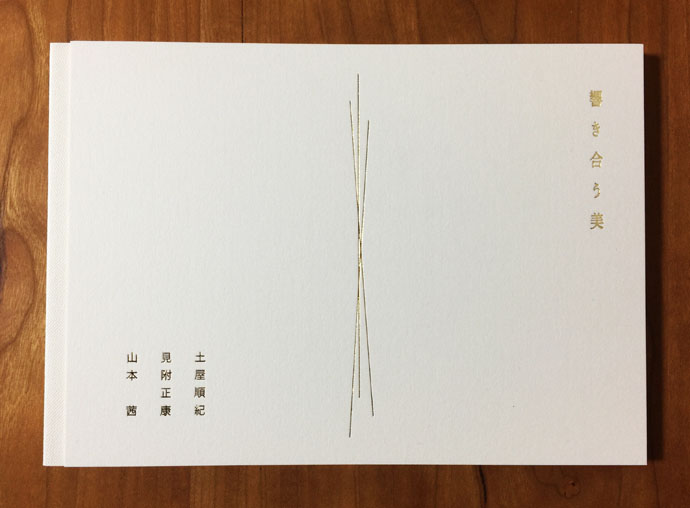
  • Release of the catalogue of the exhibition entitled Hibikiau Bi (Resonating Beauty).

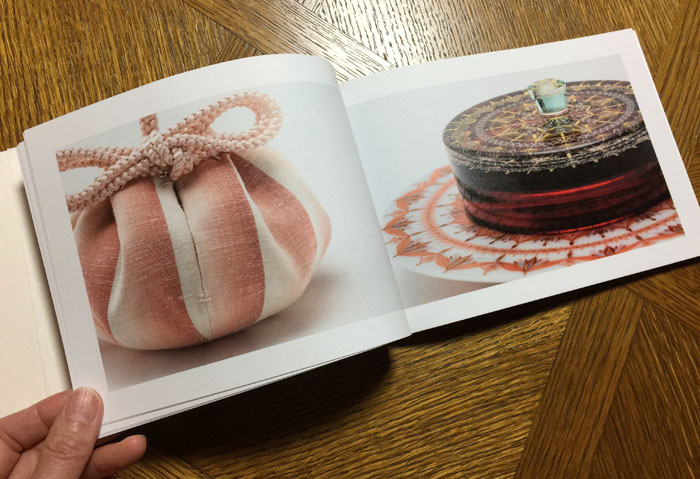
    The catalogue of the three-men exhibition, in which I was one of the participants, entitled Hibikiau Bi (Resonating Beauty) held in autumn 2017 has just been released.
    The catalogue contains the photographic representation of all of my exhibits included in the show.
    It is on sale at Gallery Now. Please contact them directly should you need more information.

    Gallery NOW
    http://www.g-now.com

  • Announcement of the event participation

    I am pleased to announce my participation in a panel discussion at KYOTO PROJECT START FORUM.


    KYOTO PROJECT START UP FORUM

    Date   : Wednesday 21st March, 2018 (National Holiday)

    Venue   : North Hall, ROHM Theatre Kyoto

    Capacity : 200 (Prior application system on first-come-first served basis) Attendance free of charge


    For more information, please visit the following website

    https://kyotoproject.jp/event/kickoff

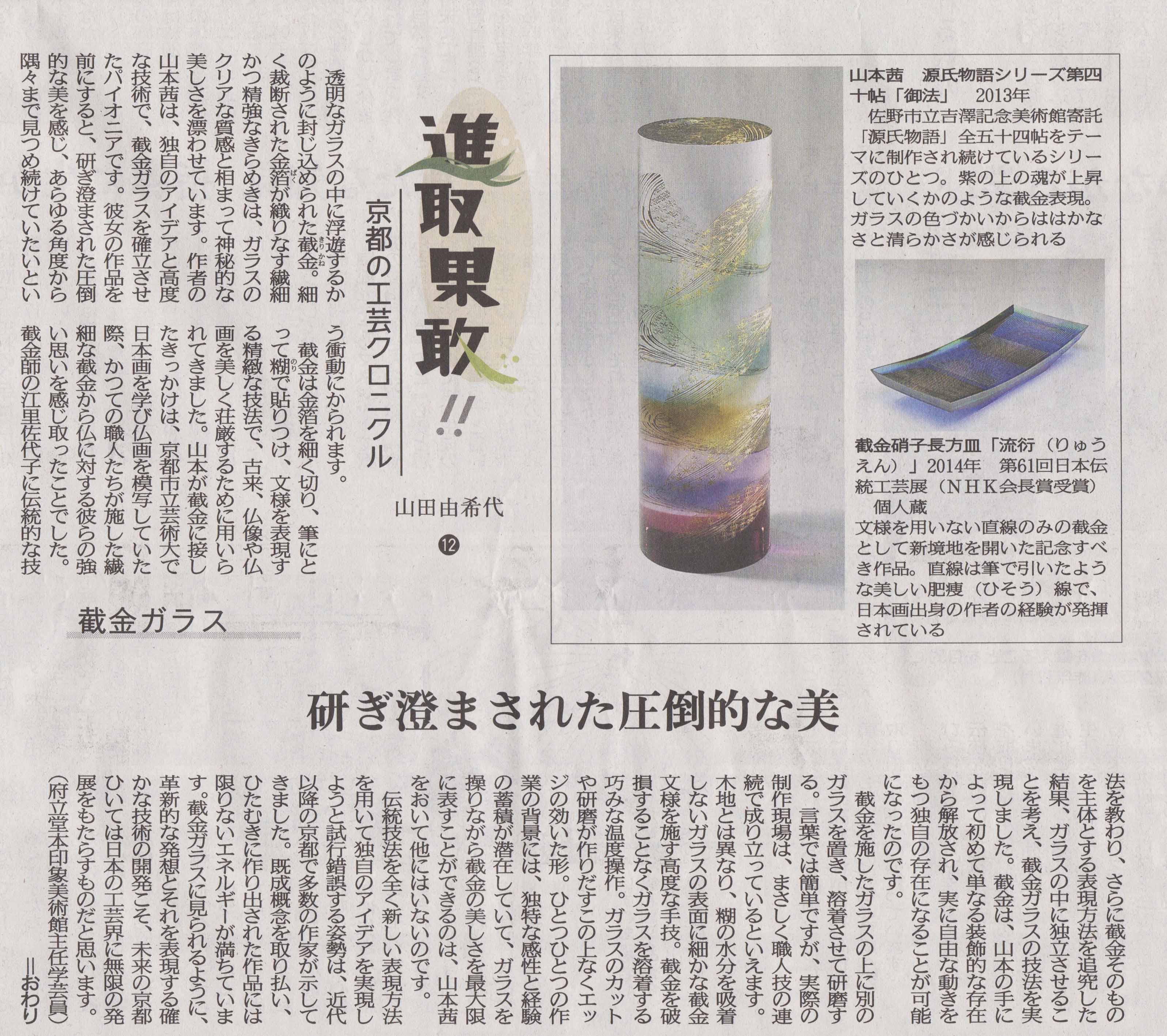
  • My work is featured in the Kyoto Shimbun.

    My work is featured in the column in the Kyoto Shimbun morning edition issued on 17th February 2018 under the title ‘Shinshu-kakan!!(Enterprising and Daring!!)– Kyoto Kōgei (arts and crafts) Chronicle’ written by Ms Yukiyo Yamada, a curator of the Kyoto Prefectural Insho-Domoto Museum of Fine Arts.

    I hope you will enjoy the read. (the column appearing on the page 10)

    Akane  Yamamoto

    The following is the English translation of this column.


    The Kirikane is entrapped in clear glass, as if suspended mid-air. Cut in to fine strips, the gold foil creates a delicate yet compelling gleam, which emits a mysterious beauty when combined with the clear quality of the glass. Artist Akane Yamamoto is a pioneer who created the Kirikane Glass through her own distinctive ideas and highly advanced technique. Upon seeing her work, one is able to feel the overwhelming refined beauty, and is overcome by an impulse to look at every corner of the piece from various angles.

    Kirikane is an elaborate technique of creating traditional patterns, where gold foil is cut into fine strips and applied with a brush and adhesive. It was used in ancient Buddhist statues and paintings to make them beautiful and majestic. Yamamoto first became interested in Kirikane when she was studying Nihonga(Japanese-style painting) at Kyoto City University of Arts and replicating a Buddhist painting. She felt the ancient masters’ strong devotion to the Buddha through the delicate Kirikane work they had applied. As she apprenticed under the Kirikane master Sayoko Eri and learned the technique, she began searching for a method of expression that allowed the Kirikane itself to become the focus of a piece. She then arrived at the idea of suspending it in glass, and completed the technique of Kirikane Glass. Through Yamamoto’s efforts, Kirikane was freed from being a mere element of decoration for something else, to embrace the possibility of being a truly free-form and unique existence.

    After the Kirikane is applied upon the surface of a glass form, it is topped with another glass form, welded together, and polished. This may sound simple, but in reality, production is only possible through continuous mastery. A highly advanced level of skill is required to apply the delicate Kirikane patterns on the glass surface, which unlike wood, cannot absorb the moisture of glue. Further expertise is required to control the temperature in order to weld the glass together without damaging the Kirikane. The glass is then cut and polished to create the intense forms and sharp edges. Behind each process lies a distinct sensibility and an accumulation of experience, and thus, Akane Yamamoto is the sole individual who can bring forth the ultimate beauty of Kirikane while also skillfully manipulating glass.

    Many artists in modern and present day Kyoto have showcased their interest in utilizing traditional techniques to achieve completely new ways of expression, repeating trial-and-error in order to realize their own unique ideas. Work that has been made free of preconceived notions carry limitless energy. As has been proved through the Kirikane Glass works, innovative ideas and the development of exceptional techniques to express them is what will bring boundless growth to the future of Kyoto, as well as the world of Japanese artistic craft.


    Caption

    Akane Yamamoto, The Tale of Genji Series, Chapter 40 “Minori”, 2013
    Deposited at Yoshizawa Memorial Museum of Art, Sano

    A piece from a series of work based on each of the 54 chapters of The Tale of Genji. The Kirikane expresses Murasaki no Ue’s soul ascending. The colors used in the glass convey impermanence as well as purity.


    Akane Yamamoto, Kirikane Glass Rectangular Plate “Propagation”, 2014
    61st Japan Traditional Art Crafts Exhibition Private collection

    A notable piece in which the Kirikane design is composed solely of straight lines instead of patterns, marking a new frontier. The lines vary in width as if drawn with a brush, showcasing the artist’s skills from her Nihonga background.